
Currently Empty: $0.00
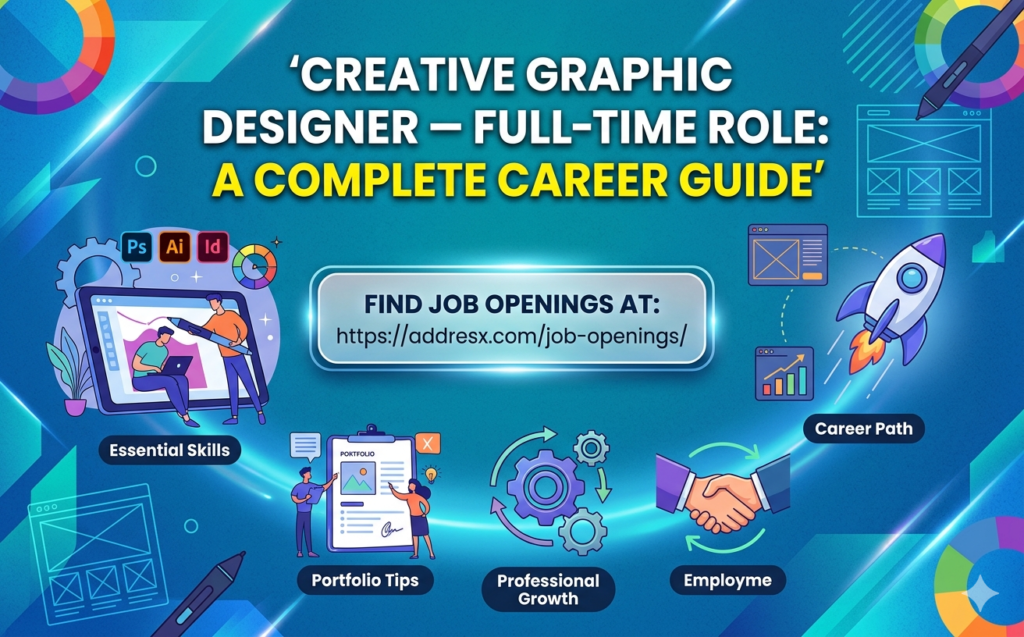
In today’s digital-first world, visual communication has become one of the most powerful tools for businesses. From social media posts to brand identities, websites, advertisements, and mobile apps—everything depends on strong, creative design. This is where the role of a Creative Graphic Designer (Full-Time) becomes essential.
If you are someone who loves creativity, visual storytelling, and digital art, this career path offers long-term growth, stability, and endless opportunities.
What is a Creative Graphic Designer?
A Creative Graphic Designer is a professional responsible for developing visual concepts that communicate ideas, inspire audiences, and strengthen brand identity. Unlike basic design work, a creative designer focuses on originality, innovation, and storytelling through visuals.
They combine art, typography, color theory, and layout principles to create visually appealing content for both digital and print platforms.
Key Responsibilities of a Full-Time Graphic Designer
A full-time creative graphic designer typically works within a company, agency, or remote team and handles a wide range of tasks. Some of the main responsibilities include:
1. Brand Identity Design
Creating logos, color palettes, typography systems, and brand guidelines that represent a company’s personality and values.
2. Social Media Design
Designing engaging posts, banners, ads, and stories for platforms like Instagram, Facebook, LinkedIn, and TikTok.
3. Marketing Materials
Developing brochures, flyers, posters, business cards, email templates, and digital ads.
4. Website & UI Elements
Creating website graphics, banners, icons, and sometimes assisting in UI/UX design for apps and web platforms.
5. Creative Campaign Development
Collaborating with marketing teams to develop visual concepts for advertising campaigns.
6. Image Editing & Retouching
Enhancing product images, portraits, and promotional visuals using tools like Photoshop.
Required Skills for a Creative Graphic Designer
To succeed in a full-time creative design role, you need both technical and creative skills.
Technical Skills
- Adobe Photoshop
- Adobe Illustrator
- Adobe InDesign
- Canva or Figma
- Basic knowledge of animation tools (optional but valuable)
Creative Skills
- Strong sense of visual storytelling
- Color theory understanding
- Typography skills
- Layout composition
- Creativity and imagination
Soft Skills
- Communication skills
- Time management
- Ability to work in a team
- Problem-solving mindset
- Attention to detail
Educational Background (Optional but Helpful)
While a formal degree is not always required, many employers prefer candidates with a background in:
- Graphic Design
- Fine Arts
- Visual Communication
- Multimedia Arts
However, many successful designers are self-taught through online courses, practice, and portfolio building.
Why Choose a Full-Time Graphic Designer Role?
A full-time position offers several advantages compared to freelance work:
1. Stable Income
You receive a fixed monthly salary, which provides financial stability.
2. Career Growth
Companies often promote designers to senior designer, creative lead, or art director roles.
3. Team Collaboration
You work with marketers, developers, and content creators, improving your skills and experience.
4. Consistent Projects
Unlike freelancing, you always have ongoing work and creative challenges.
5. Skill Development
You learn industry trends, tools, and professional workflows faster.
Career Opportunities in Graphic Design
A creative graphic designer can explore multiple career paths, including:
- Brand Designer
- UI/UX Designer
- Motion Graphic Artist
- Art Director
- Social Media Designer
- Advertising Designer
- Visual Content Creator
With experience, designers can also move into leadership roles or start their own creative agencies.
Salary Expectations
The salary of a full-time creative graphic designer depends on experience, skills, and location.
- Entry-Level: Moderate starting salary
- Mid-Level: Competitive industry pay
- Senior Level: High-paying creative leadership roles
Freelancers with strong portfolios can also earn significantly through global clients.
Tools Every Creative Designer Should Master
To stay competitive in the industry, designers should be comfortable with modern tools such as:
- Adobe Creative Cloud Suite
- Figma for UI/UX design
- Canva for quick social media content
- Procreate for digital illustration
- Blender (for 3D design basics)
Mastering these tools increases job opportunities and productivity.
Future of Graphic Design Careers
The demand for creative designers is growing rapidly due to:
- Expansion of digital marketing
- Rise of social media branding
- E-commerce growth
- Mobile app development
- Video content and animation trends
AI tools are also changing the design industry, but creativity, storytelling, and originality will always remain human strengths.
Conclusion
A Creative Graphic Designer (Full-Time Role) is more than just a job—it is a career built on imagination, innovation, and visual storytelling. With the growing demand for digital content, skilled designers are highly valued across industries.
Whether you are just starting your journey or looking to grow in your career, graphic design offers unlimited potential for creativity and professional success.
If you are passionate about art and digital media, this is the perfect career path to turn your creativity into a stable and rewarding profession.